
Evening Lectures
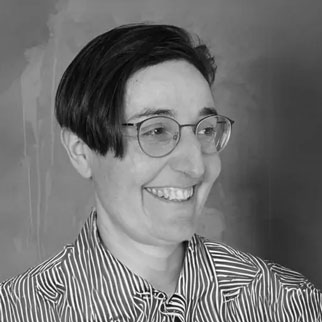
Small Language Models for Education
Aurélie Herbelot
Denotation UG
Abstract:In the space of a few years, Large Language Models (LLMs) have become a staple of Artificial Intelligence systems. Used by hundreds of millions of people on the planet, they are often heralded as a technological revolution. But the willingness of end users to believe in their promises is only matched by the lack of transparency surrounding their architecture. In this talk, I will present a tiny version of a language model, specifically developed for educational purposes and designed to be ‘opened up’ by non-experts. I will show how the system can be trained from scratch over very small amounts of data, allowing general audiences to grasp how (and what) a chatbot learns from the data it is fed with. Building on this first demonstration, I will use the model to explore fundamental questions about the linguistic abilities of LLMs: Can language models ‘understand’ negation? Can they be said to be creative? Is there a notion of propositional attitude that might apply to the utterances of a chatbot? While answers to those questions are within the remit of scientific research, I will argue that first intuitions can be given to lay audiences by manipulating the data of a tiny model and visualising its inner structure.
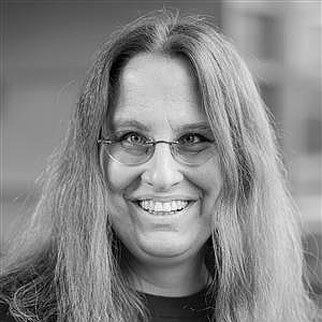
NLP: Where We Came From, Where We Are, Where We Are/Could Be Going
Julia Hockenmaier
University of Illinois – USA
Abstract: Commercial Natural Language Processing (NLP) and other so-called Generative Artificial Intelligence (GenAI) tools have become seemingly ubiquitous in recent years: automatic translation is easily available on our browsers and phones, chatbots are being used as tutors and therapists, and to write everything from emails to essays. Computer programs, images and videos can now be generated entirely from natural language input. How and why do these technologies work? What is easy about NLP, and what is challenging? Is NLP “solved”, or are there still open problems? Are these tools actually intelligent? In this lecture, I will try to give an overview of the history and the present of NLP for a general audience, and an outlook of what could come next, from the perspective of an academic researcher.
Supported by the FESR:
